Your kitchen runs hot — but is your fire suppression system actually up to the job if something goes wrong tonight?
For Cleveland restaurant owners, that question isn’t hypothetical. A grease fire can go from manageable to catastrophic in seconds. And if your suppression system isn’t installed, inspected, and up to code, you’re not just risking your equipment — you’re risking your license, your insurance coverage, and everything you’ve built.
This guide covers what Ohio law actually requires, what type of system belongs in a commercial kitchen, what it’s going to cost you, and what to look for in a local fire suppression partner who’ll still be answering the phone years from now. By the time you’re done reading, you’ll know exactly what’s required, what questions to ask, and how to get compliant without the runaround.
Do Cleveland Restaurants Have to Have a Fire Suppression System?
Yes — Ohio law and local fire codes require commercial kitchens to have an approved fire suppression system installed over all cooking equipment that produces grease-laden vapors.
- Ohio Fire Code references NFPA 96 as the installation standard
- NFPA 96 mandates automatic suppression over all hoods, ducts, and grease-producing appliances
- Cleveland Division of Fire enforces local compliance and conducts inspections
- Insurance carriers typically require a compliant system as a condition of coverage
- Non-compliance can mean failed inspections, fines, shutdowns, and voided insurance claims
What Type of Fire Suppression System Does a Restaurant Need?
If you’ve watched a grease fire spread across a commercial range, you already know why this question matters. The wrong system won’t stop it.
Wet Chemical Systems — The Commercial Kitchen Standard
Wet chemical systems are the industry standard for commercial cooking equipment. When a grease fire ignites, the system releases a potassium-based agent that reacts with burning oil to smother the fire and cool the cooking surface below the oil’s flash point. NFPA 96 requires each system be matched specifically to the equipment it protects — a fryer has different coverage requirements than a broiler, and the installation has to reflect that.

Where Suppression Systems Are Required in a Kitchen
Anywhere cooking equipment produces grease-laden vapors. That means coverage is required over:
- Fryers
- Ranges and griddles
- Broilers
- Hood exhaust plenums and duct systems
Ansul is one of the most widely recognized brand names in commercial kitchen fire suppression — the name has become so common in the industry it’s often used as a generic term for hood suppression systems.
What Does a Restaurant Fire Suppression System Cost in Cleveland?
This is usually the first question, and the honest answer is: it depends.
A single-hood installation in a smaller kitchen looks nothing like a multi-station setup in a full-service restaurant. The variables that move the number include:
- Kitchen size and layout — more cooking lines mean more coverage points
- Number of hood systems — each hood requires its own suppression design
- Equipment type — fryers and high-output broilers have more demanding coverage requirements than lighter cooking equipment
- Existing infrastructure — retrofitting an older system carries different costs than a new installation
- Ongoing service needs — installation, semi-annual inspection, and monitoring are separate cost considerations
There’s no honest way to give you a number without seeing your kitchen. Call Rhodes Security Systems at (440) 946-6685 for a no-obligation assessment. It’s a conversation, not a sales call.
What Is the Fire Suppression System in Restaurants Called?
If you’ve heard several different terms and aren’t sure they’re all referring to the same thing — they usually are.
- Wet chemical system — the technical name, referencing the potassium-based suppression agent
- Hood suppression system — named for its placement above commercial cooking hoods
- Ansul system — a brand name so widely used it’s become a generic term in the industry
- Class K system — references the fire classification for fires involving commercial cooking oils and fats
The distinctions matter more to the technician designing your installation than to the restaurant owner trying to get compliant. What matters is that the system is properly specified, installed by a qualified technician, and inspected on schedule.

Ohio Fire Code Requirements and Inspection Standards for Cleveland Restaurants
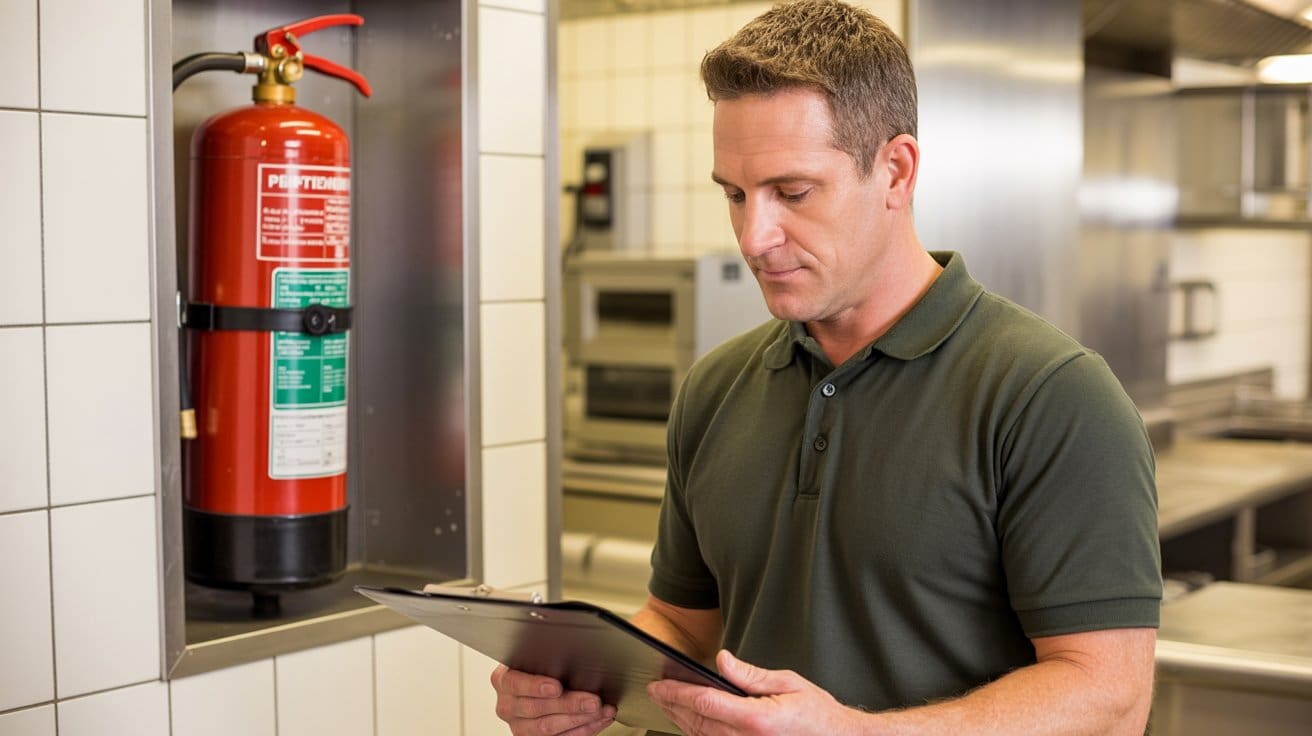
Compliance isn’t a one-time checkbox — it’s an ongoing responsibility with a real inspection schedule behind it. For most commercial kitchens, that means a certified technician servicing your suppression system twice a year. [1] [2] Here’s what inspectors are looking for when they walk into your kitchen:
Cleveland Restaurant Fire Inspection Checklist
- Nozzle coverage — properly aimed and unobstructed above all cooking equipment
- Agent levels — suppression agent charged and within specification
- Fusible links — free of grease buildup and replaced on schedule
- Hood cleaning records — documentation that cleaning has been performed per code
- Manual pull station — accessible, unobstructed, and functioning
Failing an inspection can trigger a shutdown order, put your insurance coverage at risk, and leave you liable if a fire causes harm before you’re back in compliance. The Ohio Restaurant & Hospitality Alliance is a useful resource for staying current on Ohio’s regulatory expectations for food service operators. Staying ahead of the schedule is a lot cheaper than catching up after the fact. [3]
Why Cleveland Restaurant Owners Choose a Local Fire Suppression Partner Over a National Chain
There’s a category of fire protection company that does a clean installation, hands you a binder, and then becomes very difficult to reach. Rhodes Security Systems is the opposite of that.
Since June 1974, Rhodes has been serving Northeast Ohio businesses — over 50 years of installations, inspections, and emergency calls from a company with a local address and a real phone number. Here’s what that means practically:
- Local knowledge — Rhodes understands what Cleveland fire marshals are looking for, not just what the national standard says on paper
- Single-partner advantage — installation, monitoring, and ongoing service from one company that knows your system’s history
- UL-listed monitoring station — meets insurance carrier requirements, a standard Rhodes already satisfies
- Real emergency response — when something goes wrong at 2 a.m., you’re reaching someone local who can dispatch a technician
- Certified technicians — qualified fire protection professionals, not generalists learning on your equipment
Protect Your Restaurant Before the Next Inspection
When something goes wrong with your fire suppression system, you don’t want to find out your provider is hard to reach. Rhodes Security Systems has been serving Northeast Ohio restaurants and businesses since 1974 — over 50 years of local installations, inspections, and emergency service from a company with a real address and a phone that gets answered.
Call (440) 946-6685 to talk through what your kitchen needs. No pressure — just straight answers from a local team that knows Cleveland.
Restaurant Fire Suppression Systems: Answers to the Questions Cleveland Kitchen Owners Ask Most
What should a restaurant owner expect to pay for a commercial kitchen fire suppression system?
Pricing for a restaurant fire suppression system depends on several factors specific to your kitchen. Kitchen size, number of hood systems, equipment type, and whether you’re retrofitting an existing setup all affect the final number. There’s no honest way to quote a price without seeing your space. Call us at (440) 946-6685 for a no-obligation assessment — it’s a conversation, not a sales pitch.
Are restaurant fire suppression systems legally required for commercial kitchens in Ohio?
Restaurant fire suppression systems are legally required for commercial kitchens in Ohio. State fire code references NFPA 96 as the installation standard, which mandates automatic suppression over all cooking equipment that produces grease-laden vapors — including hoods, ducts, and the appliances beneath them. Cleveland Division of Fire enforces local compliance, and most insurance carriers require a compliant system as a condition of coverage.
Which fire suppression system is designed specifically for commercial cooking equipment?
Wet chemical systems are the standard designed specifically for commercial cooking equipment. When a grease fire ignites, the system releases a potassium-based agent that smothers the fire and cools the cooking surface below the oil’s flash point. NFPA 96 requires each system to be matched to the specific equipment it protects — a fryer has different coverage requirements than a broiler.
Resources
- https://www.tfp1.com/blog/what-to-expect-from-your-semi-annual-kitchen-fire-suppression-system-inspection/
- https://codelibrary.amlegal.com/codes/southeuclid/latest/seuclid_oh/0-0-0-18925
- https://www.eatdrinkohio.org/