
Your fire marshal just flagged your system. Your insurance agent is asking questions. And now you’re staring at two options on a contractor’s quote — addressable and conventional — with no idea which one actually fits your building.
This isn’t a sales pitch. It’s a plain-language breakdown of two legitimate system types that Ohio business owners deal with every day. By the time you finish reading, you’ll know how each system works, which building types each one suits, and — maybe most importantly — what questions to bring to your trusted fire alarm contractor before you sign anything.
What’s the Difference Between Addressable and Conventional Fire Alarm Systems?
The core difference comes down to how each system identifies and reports a triggered device.
- Conventional systems divide a building into zones; when a device triggers, the panel identifies the zone — not the specific device
- Addressable systems assign a unique identifier to each device; when a device triggers, the panel pinpoints the exact location
- Conventional systems are simpler and lower in upfront cost
- Addressable systems provide faster, more precise response and are better suited to larger or more complex buildings
- Both system types can meet Ohio fire code requirements depending on building size and occupancy type
How Conventional Fire Alarm Systems Work
A conventional fire alarm system operates on a zone-based model. The building gets divided into sections — each zone has its own circuit — and when a smoke detector, heat sensor, or pull station triggers, the fire alarm control panel lights up that zone. That’s it. You know where in the building the alert came from, but you don’t know which specific device triggered it.
For a first responder walking into a building, that’s the difference between going straight to the problem and searching an entire wing.
The wiring runs in parallel circuits, one per zone, which keeps installation relatively straightforward and costs down. Conventional systems carry a lower upfront price tag than addressable systems — and for the right building, that’s a completely reasonable trade-off. Where they start to show their limits is in larger, more complex spaces where precise device-level identification matters.
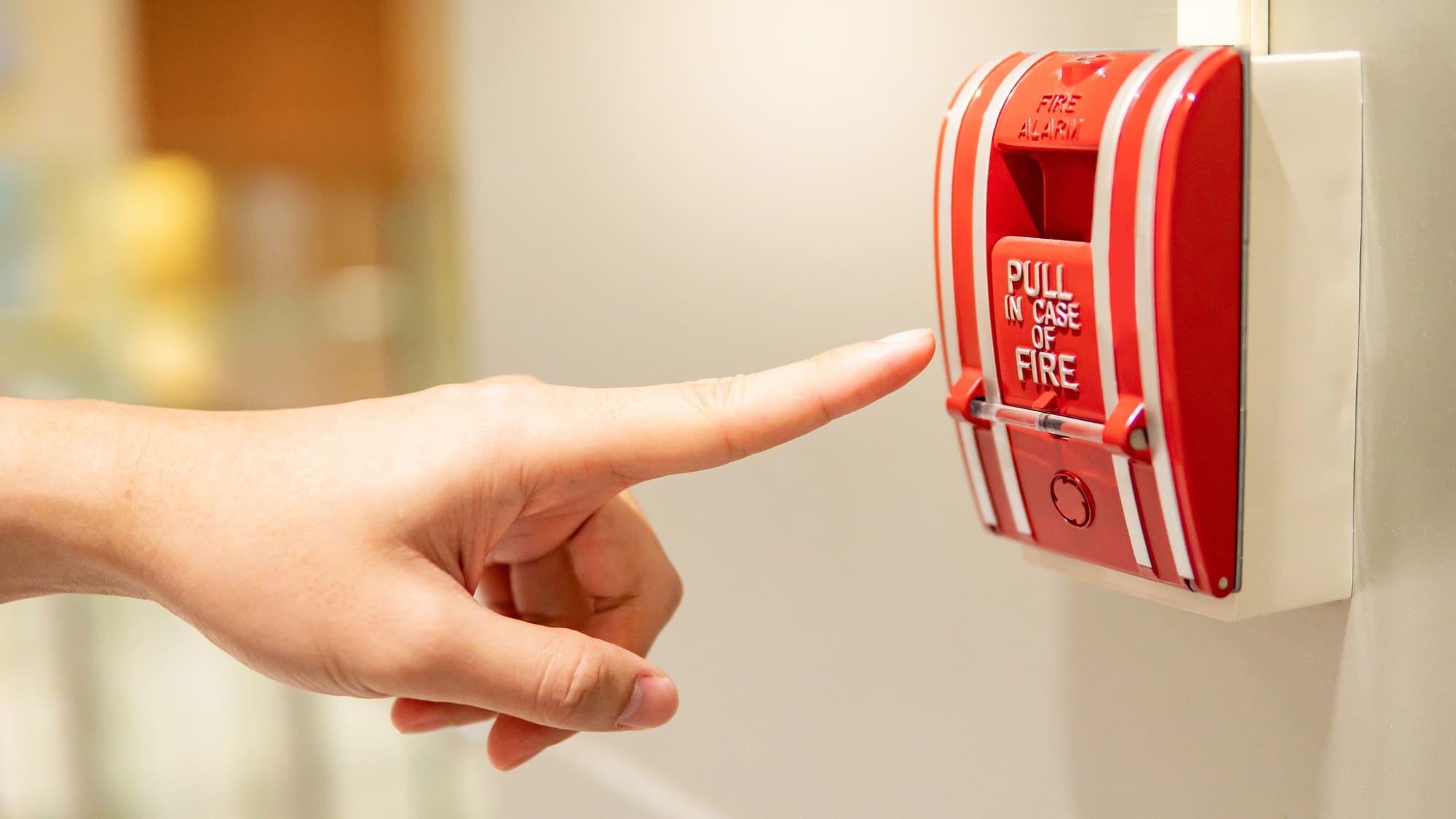
Where Conventional Systems Make Sense
Conventional fire alarm systems are a practical fit for:
- Small retail spaces with straightforward, open floor plans and limited square footage
- Single-tenant offices under 5,000 sq ft where a single zone covers the whole space without sacrificing much response precision
- Warehouses and single-story commercial buildings with simple layouts and few detection zones needed
- Lower-complexity occupancy types where code requirements don’t mandate device-level identification
For smaller footprints, the cost advantage is real — and in many cases, a conventional system will satisfy both Ohio fire code and insurance requirements without any issue.
How Addressable Fire Alarm Systems Work
An addressable fire alarm system takes a more precise approach. Every single device on the system — each smoke detector, heat sensor, pull station, and notification device — gets its own unique address. When something triggers, the fire alarm control panel doesn’t just tell you a zone is active. It tells you exactly which device, exactly where it is, down to the room or corridor.
For emergency responders, that’s a game-changer. Instead of searching a floor, they’re walking directly to the source.
Addressable systems use loop wiring, where devices connect in a continuous loop rather than separate parallel circuits — which means if one section of wire gets damaged, the system can often still communicate through the other side. That reliability advantage, combined with easier long-term maintenance and cleaner performance through insurance and fire marshal inspections, is where the higher upfront cost tends to pay back over time.
Where Addressable Systems Make Sense
Addressable fire alarm systems are the stronger fit for:
- Multi-tenant office buildings where pinpointing a specific suite or floor matters
- Manufacturing facilities with multiple entry points, large square footage, and varied occupancy zones
- Medical offices and healthcare spaces where fast, precise emergency response is non-negotiable
- Restaurants with separate kitchen and dining zones where heat and smoke conditions vary significantly by area
Insurance carriers and fire marshals in Northeast Ohio increasingly favor addressable systems for larger commercial properties — and that preference is worth factoring into your decision before you sign off on anything.
Not sure which system fits your building? Rhodes Security Systems offers site assessments for Northeast Ohio commercial properties. Call (440) 946-6685.
Side-by-Side Comparison — Key Decision Factors
If you’re holding two quotes and trying to make a decision, here’s the framework that actually matters. This isn’t about which system sounds more impressive — it’s about which one fits your building, your budget, and your compliance requirements.
| Factor | Conventional | Addressable |
|---|---|---|
| Detection Precision | Zone-level — identifies the area, not the device | Device-level — pinpoints the exact detector or pull station |
| Response Speed | Slower to locate; responders search within a zone | Faster; responders go directly to the triggered device |
| Scalability | Harder to expand; adding zones means adding circuits | Accommodates growth more cleanly; new devices added to the loop |
| Upfront Cost | Lower | Higher |
| Long-Term Cost | Higher service and false alarm costs over time | Individual device diagnostics reduce unnecessary dispatches |
| False Alarm Management | Limited — zone identified but not the specific device | Device-level diagnostics make it easier to identify and resolve the source |
| Code & Insurance Compliance | Can comply for smaller occupancies | Increasingly preferred by insurers for larger commercial properties |
| Installation Complexity | Simpler | More involved — neither type is a DIY consideration |
The governing standard for both system types is NFPA 72, the National Fire Alarm and Signaling Code. [1] Any licensed fire alarm contractor working in Ohio should be designing and installing to that standard — and if they’re not referencing it, that’s worth asking about.

What Ohio Commercial Buildings Are Required to Have
This is the question that keeps a lot of Northeast Ohio business owners up at night — am I actually compliant, or am I one inspection away from a problem?
Ohio fire code requirements aren’t one-size-fits-all. What your building needs depends on a combination of factors:
- Occupancy classification — how your building is classified determines which detection and notification requirements apply
- Square footage and occupant load — certain thresholds trigger requirements for more sophisticated systems
- Local jurisdiction — fire marshals in Lake County and Cuyahoga County conduct inspections and may layer additional requirements on top of state code
The Ohio Fire Code sets the state-level framework, but what passes in one municipality doesn’t automatically pass in the next. [2] Both addressable and conventional systems can meet Ohio code — it comes down to your specific building profile.
Rhodes Security Systems has been a trusted name in Northeast Ohio security since 1974, with deep familiarity navigating the compliance landscape that local business owners face. A professional site assessment is the most reliable way to get a code-accurate answer for your specific building and occupancy classification.
Questions to Ask Before Choosing a System
Before you commit to anything, bring these questions to every contractor conversation. A qualified fire alarm professional should be able to answer all of them clearly and without hesitation. If they can’t — or won’t — that tells you something important.
- What occupancy classification does my building fall under, and what does that require?
- How many detection zones or devices does my building need?
- Will my insurance carrier require or prefer a specific system type?
- How does each system type affect my monitoring setup and monthly costs?
- What does future expansion or tenant build-out mean for my current system choice?
- Who handles ongoing maintenance and inspection documentation?
The only way to get a code-accurate answer for your specific building is through a professional site assessment — because every building has its own layout, occupancy profile, and compliance picture.
Ready to Get a Straight Answer About Your Building?
Choosing between an addressable and conventional system comes down to your building’s specific layout, occupancy type, and compliance requirements — and those details matter. Rhodes Security Systems has been helping Northeast Ohio businesses get security and fire protection right since 1974. Call (440) 946-6685 to schedule a no-obligation site assessment and get a straight answer about what your building actually needs.

Does Your Building Have the Right Fire Alarm System? Here’s What You Should Know
How do addressable and conventional fire alarm systems compare?
Addressable and conventional fire alarm systems differ primarily in how they identify a triggered device. Conventional systems alert you to a zone within the building, while addressable systems pinpoint the exact device. Addressable systems cost more upfront but offer faster emergency response, easier maintenance, and better long-term performance for larger, more complex commercial buildings.
Why do many commercial buildings choose addressable fire alarm systems over conventional ones?
Addressable fire alarm systems give emergency responders exact device-level location data the moment something triggers — no searching, no guessing. They also reduce false alarm dispatches, support easier long-term maintenance, and are increasingly favored by insurance carriers and fire marshals in Northeast Ohio for larger commercial properties.
Which fire alarm system is the right choice for a commercial building?
The right system depends on your building’s size, layout, occupancy type, and local code requirements. Smaller, simpler buildings often do well with conventional systems, while larger or multi-tenant properties typically call for addressable systems. We always recommend starting with a professional site assessment — call Rhodes Security at (440) 946-6685 to get an answer that fits your building.
Resources
- https://www.nfpa.org/news-blogs-and-articles/blogs/2021/03/03/a-guide-to-fire-alarm-basics
- https://codes.ohio.gov/ohio-administrative-code/rule-1301:7-7-09